
Two cooling infusions, one honest answer: both buy you minutes of coolness, not a cold night.
The Two Options at a Glance
Copper Memory Foam
Standard viscoelastic memory foam blended with microscopic copper flakes or copper gel. Copper conducts heat well, so it pulls warmth off your skin a little faster, and brands layer antimicrobial claims on top. The feel is the classic slow, contouring memory foam hug.
- Feel
- Slow, contouring hug
- Typical lifespan
- 3 to 5 years (topper)
- Price range
- $130 to $250 (queen)
- Stand-out trait
- Antimicrobial freshness angle
Gel Memory Foam
The same base foam with gel beads, a liquid gel swirl, or phase-change material that absorbs heat as you lie down. It feels cooler at first contact, then warms through like any foam. The feel is the same slow hug, sometimes a touch firmer.
- Feel
- Slow hug, a touch firmer
- Typical lifespan
- 3 to 5 years (topper)
- Price range
- $120 to $220 (queen)
- Stand-out trait
- Cool first contact for less money
How They Compare, Trait by Trait
For first-touch cooling, copper is marginally ahead. Copper flakes conduct heat off your skin faster than gel can absorb it, so a copper topper feels cool the moment you lie down. Gel is close behind with the same cool first contact. Either way, the effect lasts roughly 20 to 40 minutes before the foam warms through.
Neither wins here. Healthline notes there are no scientific studies on the cooling properties of copper mattresses specifically, and the Sleep Foundation found gel offers minimal, if any, cooling benefit over plain memory foam in all-foam products. Once either foam saturates with body heat, the two feel close to the same. Latex and wool breathe better than both.
Copper takes this one by default, since gel makes no antimicrobial claim at all. Copper ions disrupt bacteria on contact in lab settings, and one hospital study found copper-treated beds cut surface bacteria by 94 percent. But a 2020 study found copper-oxide sheets did not reduce real-world infection rates, so treat it as a freshness perk, not a health treatment.
Call it a draw. Both sit on the same viscoelastic base, so you get the identical slow, deep cradle for hips and shoulders. A thick gel layer can feel slightly firmer, while copper flakes do not change the feel much. Density and thickness affect comfort far more than the additive does, so pick higher-density foam in a 3-inch profile either way.
Gel is the better value. A queen gel topper runs about $120 to $220, while copper usually starts around $130 and reaches $250 because the metal is a pricier additive. The cooling experience is similar from both, so the copper premium only makes sense if the antimicrobial freshness angle matters to you.
Our Top Picks for Each Side


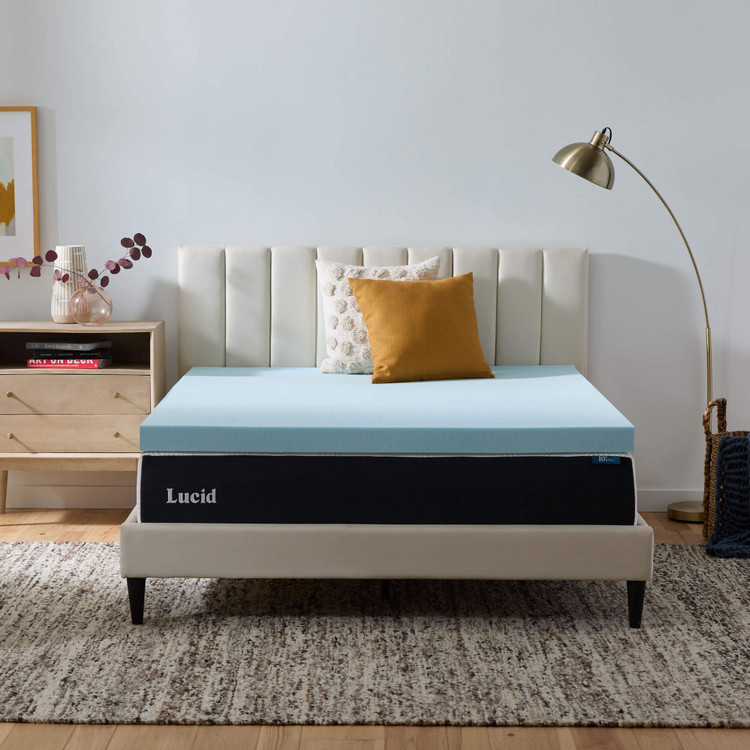
Quick Verdict
Pick Copper Memory Foam if :
- You want the antimicrobial freshness angle gel does not offer
- You sleep warm and want pressure relief with a cool first touch
- You accept a small premium for the copper additive
Pick Gel Memory Foam if :
- You want a similar cool-to-the-touch feel for less money
- You want the widest choice of 2 to 3 inch profiles
- Freshness claims do not matter to you, only comfort per dollar
Frequently Asked Questions
Does copper memory foam actually cool better than gel?
Is the antimicrobial claim on copper foam real?
Which is cheaper, copper or gel?
Do copper and gel toppers feel different?
What actually cools better than either foam?
Last updated: September 2026. Reviewed by Paata, Bedding Advisor at Best Mattress Topper. Some links are affiliate links: we may earn a commission at no extra cost to you. We do not accept paid placements.